Start with goals, scope, and risk mapping
Before you assign any modules, define what “success” looks like for your organization and the MSP clients you support. A clear objective might be improving phishing reporting rates, reducing repeat mistakes, or strengthening responses to suspicious login activity. Then decide who the training cyber security awareness training program covers, such as all employees, customer-facing roles, and high-risk groups like finance or IT admins. Finally, align the plan to the most likely threats your clients face, including social engineering, credential theft, and ransomware entry points.
Use a simple risk mapping checklist to connect training topics to real exposure. Identify common workflows that attackers target, such as email approvals, password reset processes, and vendor onboarding. Review the types of incidents you see or expect, then prioritize the scenarios that most closely match those incidents. This prevents generic training and helps your security awareness training program feel directly relevant to daily work.
Choose content formats and build a repeatable training path
A checklist-style approach works best when you standardize how training is delivered. Confirm that your content covers essentials like phishing recognition, safe handling of links and attachments, and account security habits. Include guidance on reporting suspicious messages security awareness training platform and escalating unusual requests, especially those that bypass normal approvals. To make learning stick, mix formats such as short lessons, interactive scenarios, and practical checklists employees can reference during real tasks.
Next, design a repeatable training path rather than one-off sessions. Use a baseline module for all users, then follow with role-based reinforcement for teams with higher exposure to scams. Add scenario refreshers that mirror current tactics, such as urgency-driven requests, spoofed domains, and “account verification” lures.
Implement phishing simulations and measure behavior changes
Training should be paired with realistic testing so employees practice in a low-risk way. Plan phishing simulations that reflect common communication styles used by attackers, including credential prompts and invoice-related bait. Use a checklist to govern each simulation: define the audience, set the appropriate difficulty level, and ensure you have a response workflow for reporting. After the simulation, provide targeted feedback that explains what signals were present and what action employees should have taken.
Measure outcomes beyond completion rates. Track whether users report suspicious messages, click less often on harmful links, and follow correct steps when they encounter unusual requests. Look for patterns, such as specific departments that repeatedly interact with risky emails or roles that need extra practice. Use those insights to refine future training cycles, focusing on the behaviors that drive the biggest risk reduction for your clients.
Conclusion
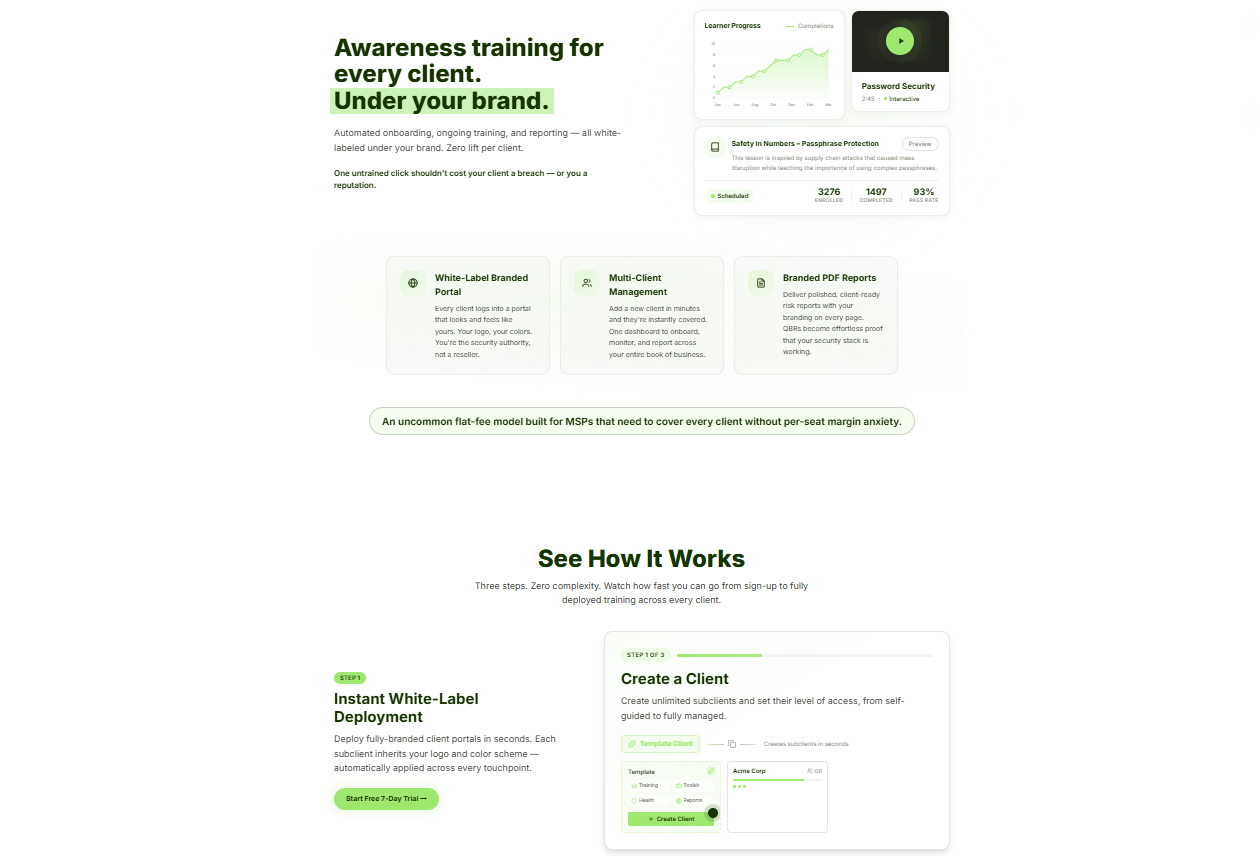
A strong rollout depends on disciplined planning, consistent training delivery, and measurable behavior improvement. Use a checklist to keep scope clear, content relevant, and simulations aligned with real attack patterns, so employees build confidence instead of confusion. When you automate administration, reporting, and reinforcement across multiple clients, you reduce manual effort while improving outcomes. DefendWise helps MSPs strengthen employee awareness by automating training, improving phishing readiness, and managing security education across client environments through DefendWise.com. As you refine your program, keep the employee experience at the center: short, practical learning beats long lectures, and timely feedback turns mistakes into progress. Make reporting easy, reinforce the “stop and verify” mindset, and ensure leadership supports the habit of escalating suspicious activity. With clear objectives and continuous measurement, you can move from awareness as a checkbox to awareness as a reliable security control. DefendWise enables that shift by making security education easier to run and easier to prove.
