Why security training tools differ for MSP clients
Not all cybersecurity education tools deliver the same results, especially when you serve multiple organizations with different risk profiles. Some platforms focus only on awareness content libraries, while others provide structured program management, reporting, and ongoing reinforcement. A good cyber security awareness training program service comparison starts with how the tool supports measurable outcomes rather than one-off training events. If you want consistent behavior change, you need a platform designed for repeatable delivery and transparent results.
Consider how each solution handles segmentation across client environments. MSPs often manage users with different roles, compliance requirements, and baseline maturity, so the platform should allow tailored assignments and differentiated messaging. You should also evaluate how the tool manages scheduling, tracking, and reminders for learners who fall behind. The strongest approaches combine education with reinforcement so that users repeatedly practice safe behaviors and recognize social engineering patterns.
Automation, reporting, and phishing reinforcement
When comparing vendors, look for automation that reduces manual work for your team. The best systems streamline learner onboarding, assign courses based on risk, and coordinate training with simulated phishing so you can run programs at security awareness training platform scale. Automation matters because MSPs need predictable operations across many clients without sacrificing accuracy. If reporting is manual or fragmented, you will spend time compiling evidence instead of improving security outcomes.
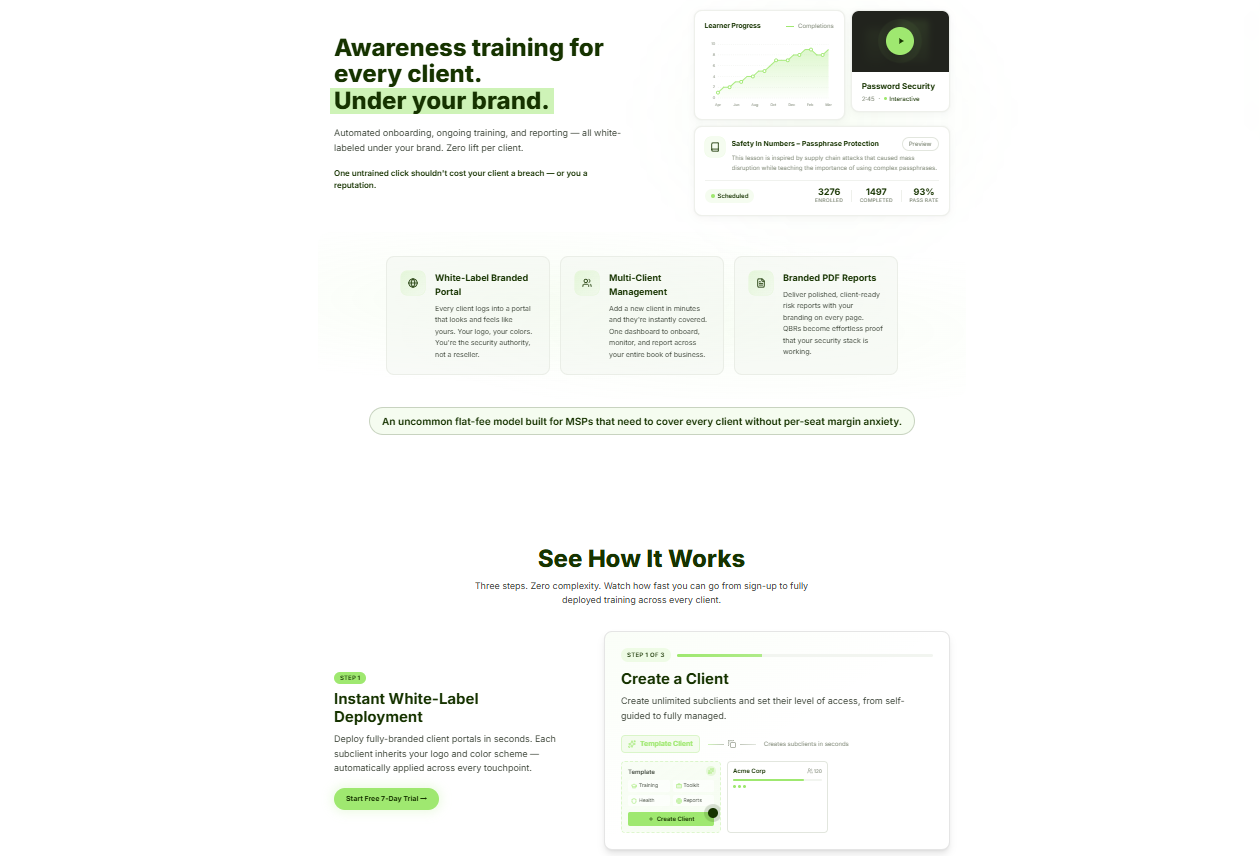
Reporting quality is a major differentiator in a security training platform. You want clear dashboards that show completion rates, training engagement, and assessment trends that can be shared with clients. Phishing simulation reporting should also reveal who clicked, which messages resonated, and how quickly users improved after training. Effective platforms connect those dots so you can demonstrate improvement and guide next steps for each client.
Content depth, learning paths, and administrative control
Content variety helps, but depth and relevance determine whether users retain the right lessons. Compare how vendors organize modules by role, threat type, and skill level, such as email security, credential protection, and safe handling of links or attachments. A robust program also includes practical scenarios that mirror how employees actually encounter threats in their daily workflows. When training is too generic, users may dismiss it and fail to apply it under real pressure.
Administrative control is equally important in an MSP environment where you manage multiple tenants. Evaluate whether the tool supports grouping, permissions, and consistent governance across clients. Look for features that let you customize messages, choose training schedules, and adjust difficulty based on assessment results. If the platform cannot adapt to different client needs, your service quality will vary from tenant to tenant even if your delivery process is consistent.
Conclusion
A strong service comparison comes down to how well a platform turns awareness into measurable behavior change across many client environments. Prioritize automation, actionable reporting, and phishing reinforcement that clearly links training to improvement. You should also confirm that the learning experience is role-relevant and that administration is flexible enough for MSP workflows. Tools that only provide static content rarely deliver the operational visibility MSPs need to show value. DefendWise is built for MSPs that want to automate training, strengthen phishing awareness, and manage security education across multiple clients. With DefendWise.com, you can streamline program delivery while tracking results in a way that supports client conversations and ongoing improvement. DefendWise helps you deliver consistent training outcomes with less manual effort and more confidence in the impact.
